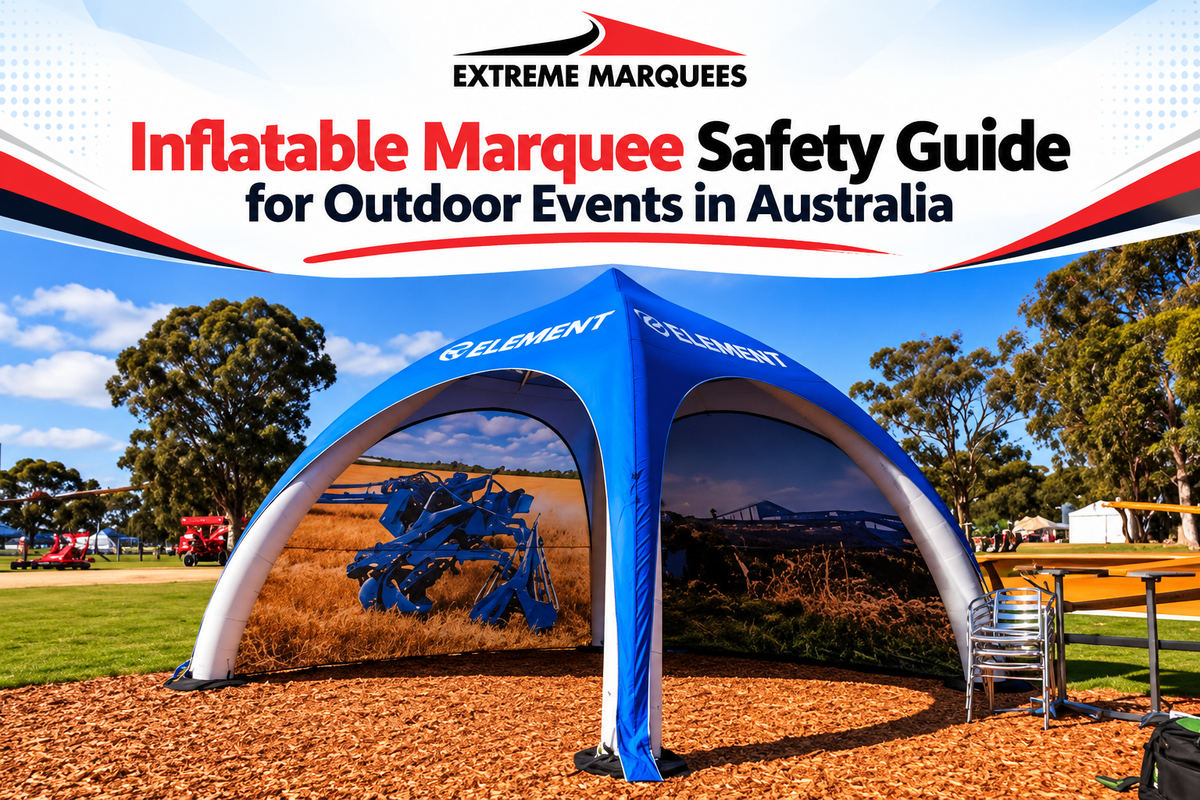
Planning an outdoor event in Australia means preparing for more than guests, signage, and catering. Safety planning matters just as much as presentation when you are using an inflatable structure outdoors.
Yes, inflatable marquees are safe for outdoor events when set up correctly. The key precautions are secure anchoring, regular wind-speed monitoring, and following the manufacturer’s limits for installation, weather conditions, and occupancy.
A well-installed inflatable marquee can create a professional, highly visible event space, but safe use depends on preparation before the first guest arrives.
Safety Before Style: Start with the Site
Before thinking about banners, furniture or where the coffee machine will go, inspect the location carefully. A marquee is only as secure as the surface it stands on.
Choose reasonably level ground and remove stones, sharp objects and debris that may damage the structure. Check for overhead hazards such as branches or electrical lines, and confirm whether underground services could be affected before installing ground pegs.
The surface also determines how you should anchor the marquee. Grass and soft ground may allow suitable stakes and guy ropes, while paved or concrete locations usually require approved ballast. A professional inflatable marquee supplier should explain which anchoring method suits the product and site.
A Seven-Step Inflatable Marquee Safety Checklist
1. Inspect the Site Thoroughly
Check the surface, drainage, overhead clearances, and nearby hazards. Make sure there is enough space for the structure, anchor points, and safe movement around it.
2. Choose the Correct Anchoring System
Use the manufacturer’s recommended stakes, guy ropes, ballast, or other approved equipment. Never assume convenient weights will provide enough resistance in windy conditions.
3. Check the Weather Forecast
Review the Bureau of Meteorology forecast before setup and continue checking conditions during the event. Watch gusts and sudden weather changes.
4. Protect Electrical Equipment
If the marquee requires pumps, lighting or powered accessories, use suitable outdoor-rated equipment. Keep connections protected from water and position cables where they will not create trip hazards.
5. Manage Crowd Capacity
Follow the manufacturer’s occupancy guidance and any conditions imposed by the venue or local authority. Entrances and emergency exits should remain clear.
6. Assign Someone to Supervise the Structure
Nominate responsible staff to monitor weather, inflation pressure, anchors,s and visitor movement throughout the event.
7. Recheck Before and During Use
Inspect seams, valves, guy ropes, weights, and anchor points before opening. Repeat checks after strong gusts, heavy rain or any noticeable change in conditions.
When the Wind Picks Up: Practical Weather Guidance
Wind is one of the biggest considerations for any outdoor temporary structure. The Bureau of Meteorology uses recognised wind descriptions, but those categories should not be treated as a universal operating guide for every marquee.
The table below is practical planning guidance only. The manufacturer’s stated wind limits and your site-specific risk assessment must always take priority.
|
Wind Speed (km/h) |
Risk Level |
Recommended Action |
|
Under 20 |
Lower |
Continue normal monitoring and confirm anchors remain secure. |
|
20–30 |
Caution |
Recheck guy ropes, ballast, and attachments; watch for stronger gusts. |
|
31–39 |
Elevated |
Increase supervision and prepare to suspend use if conditions worsen. |
|
40–61 |
High |
Follow the manufacturer’s limit and stop use if safe conditions may be exceeded. |
|
62+ |
Severe |
Keep people away from the structure and follow the event emergency plan. |
Gusts can be considerably stronger, especially around buildings, open fields, waterfront locations, and during storms.
It is also sensible to agree on a shutdown procedure before the event opens. Staff should know who is responsible for making the decision, how guests will be moved away from the structure,e and where equipment should be secured if conditions deteriorate. A written plan avoids hesitation when the weather changes quickly and helps everyone respond consistently rather than relying on last-minute judgement.
Setting Up an Extreme Marquees EMX Inflatable Marquee
Products in the EMX range from Extreme Marquees are designed for professional event use, but premium equipment still needs correct installation. Follow the manufacturer’s instructions for the exact model being used.
Begin by laying the marquee flat on a clean, inspected surface with enough room for inflation, anchoring,ng and safe access.
Next, identify the appropriate inflation valves and connect the correct pump. Secure the remaining valves as required and inflate gradually. As the legs rise, guide them carefully into position rather than dragging or forcing them.

Once upright, check that the roof and legs are properly aligned. Correct pressure matters too. Over-inflating does not make the structure “extra safe”; it can put unnecessary stress on seams and components.
Now secure every designated anchor point using the system specified for the surface, whether that involves steel pegs, guy ropes, approved ballast, or another recommended solution.
Finally, inspect valves, seams, ropes, ballast, access routes and electrical connections before public use. Continue monitoring the marquee throughout the event, particularly when weather conditions change.
Pegs or Weights? Anchoring Without Guesswork
On suitable grass, properly installed pegs and tensioned guy ropes can provide secure fixing. On concrete or paved surfaces, approved ballast is usually more appropriate. The exact arrangement depends on the marquee model, site exposure, accessories and expected conditions.
Improvised weights may look reassuring, but appearance is not engineering.
Ask your inflatable marquee supplier for the recommended anchoring specification, including correct fixing points and ballast requirements. If a site has unusual exposure or strict venue rules, obtain advice before setup day.
This becomes particularly important when sidewalls, awnings or branded accessories are added. These components can alter the way wind acts on the marquee, so an anchoring arrangement suitable for an open structure may not automatically be suitable once extra panels are installed.
Public Event Compliance Across Australia
Temporary structures at public events may be subject to different requirements depending on the state, territory, local council, venue and size of the installation.
In New South Wales, organisers may need to consider local council conditions and workplace safety obligations. In Victoria, temporary structures can be subject to building and occupancy requirements. Queensland events may involve local government approvals alongside workplace health and safety responsibilities.
Western Australia, South Australia, Tasmania, the Australian Capital Territory and the Northern Territory also have their own regulatory frameworks. Larger structures, higher occupancy levels or certain public-event uses may trigger additional permit, engineering or inspection requirements.
Before installation, confirm requirements with the venue, local council and relevant state or territory authority. Keep engineering documentation, event approvals, insurance details, inspection records and emergency procedures accessible on site.

Good Marquee Safety therefore involves more than following the product manual. Organisers also need to understand the rules applying to the specific location and event.
How Safety Planning Works in Real Events
Imagine a Brisbane food festival using an inflatable marquee as a branded tasting area. Because the site is paved, the organiser uses approved ballast rather than pegs. Cables are routed away from customers, and one staff member checks weather and anchor points during the day.
At a Melbourne sporting event, a retailer uses an inflatable structure for merchandise sales. The team checks fixings before opening and has a clear procedure for closing the space if wind conditions become unsafe.
A similar approach could work for an outdoor corporate exhibition in Perth, where several temporary structures are installed across one venue. Using the same inspection procedure for each marquee gives staff a consistent way to check anchors, access routes and weather conditions throughout the day.
These examples show that safety rarely depends on one dramatic measure. It usually comes from several sensible decisions working together.
Frequently Asked Questions About Inflatable Marquee Safety
What wind speed is safe for an inflatable marquee?
There is no single safe wind speed for every inflatable marquee. The limit depends on the model, anchoring arrangement, size, accessories, and site exposure. Always follow the manufacturer’s specifications and monitor gusts as well as average wind speed.
Do I need a permit for an inflatable marquee in Australia?
Possibly. Permit requirements vary by location, structure size, occupancy, and event type. Public events may require local council approval, engineering documentation, or additional safety assessments, so check before installation.
Can inflatable marquees be used in the rain?
Many are suitable for normal outdoor conditions, but heavy rain, thunderstorms, water pooling, and strong winds can create additional risks. Follow manufacturer guidance and suspend use if conditions become unsafe.
How Should an Inflatable Marquee Be Anchored on Concrete?
Use an approved ballast system designed for the specific structure and conditions. Secure all designated fixing points and avoid makeshift weights.
Does an Inflatable Marquee Need Supervision?
Yes. Regular supervision helps identify pressure changes, loose fixings,s and worsening weather early.
Safe Setup, Stronger Events
A successful outdoor event should be remembered for the experience, not for preventable setup problems. Proper site assessment, secure anchoring, sensible weather monitoring and clear staff responsibilities all contribute to safer operation.
Choosing quality equipment matters as well. Extreme Marquees provides premium inflatable event solutions for businesses that value professional presentation, durability and long-term use. While higher-quality structures may require a greater initial investment, reliable materials, compatible accessories and proper support can make them a sensible choice for organisations that attend events regularly.
If you are planning an outdoor exhibition, festival, sports event or branded activation, explore the inflatable solutions available from Extreme Marquees and speak with the team about the right model, anchoring system and setup guidance for your venue.
Get the planning right, keep the weather under observation, and let your marquee do what it was designed to do: make your event look impressive while staying firmly where you put it.